


Label STEP Certification: How to Verify an Authentic Carpet
Before a Pakistani buyer asks which carpet to choose, they ask a different question first: is this business even real. Online scams have trained a generation of shoppers to distrust a listing before they even look at the rug in it.
Label STEP is one of the few checkable answers to that question. It is a third-party fair-trade standard, not a marketing word, and it comes with a public record you can look up yourself in under a minute. This guide explains what the certification actually covers, walks through the exact steps to verify a dealer's listing, and compares it honestly to GoodWeave, the other certification body active in the handmade carpet trade.
Key Takeaways
- Label STEP audits up to 90 compliance measures across fair wages, child and forced labor prohibition, safety, and environmental standards (Label STEP).
- Verification is at the dealer level, not the rug level: there is no per-carpet QR code or serial number. You confirm the company against Label STEP's public partner directory.
- Label STEP has run its Pakistan program since 1997, working with a small number of manufacturers (Label STEP).
- GoodWeave works differently: it issues a unique traceable code per label, which is a product-level system rather than a company-level one (GoodWeave).
- Imam Carpets is one of two Label STEP certified manufacturers in Pakistan, listed directly on Label STEP's own site.
What Is Label STEP Certification?
Label STEP is an independent Swiss fair-trade standard for the carpet industry, founded in 1995, with more than 25 years of work monitoring and improving conditions in carpet production (Label STEP). It is not a government body and not a trade association speaking for its members' interests. It is a third-party auditor whose only job is to check whether a carpet manufacturer's working conditions match its published standard.
That standard covers up to 90 individual compliance measures, organized around ten core commitments: fair wages, no child labor, no forced labor, safe working conditions, freedom of association and collective bargaining, non-discrimination, and environmental protection among them (Label STEP). A manufacturer does not get the listing by filling out a form. It gets audited against these measures, on an ongoing basis, by people whose job is verification, not promotion.
Label STEP began working in Pakistan specifically in 1997 and has since helped establish dozens of schools as part of its country program (Label STEP). Pakistan is one of a small number of carpet-producing countries where Label STEP is active, alongside Afghanistan, India, Iran, Nepal, and Turkey.
What Does Label STEP Actually Audit?
The short answer: working conditions inside the workshop, not the finished rug's appearance. A Label STEP audit does not grade knot count or pattern quality. It grades whether the people who tied those knots were paid fairly, worked safely, and were not children.

The six areas the standard covers most directly:
- Fair wages: pay that meets or exceeds legal minimums for the region
- No child labor: a hard prohibition, checked through site visits
- No forced labor: workers are free to leave, are not in debt bondage
- Health and safety: ventilation, lighting, and physical working conditions at the loom
- Collective bargaining: workers' right to organize is not blocked
- Environmental standards: dye and wastewater handling practices
How to Verify a Carpet Dealer's Label STEP Certification Yourself
You don't need to take a retailer's word for it. Label STEP publishes a public partner directory, and checking a dealer against it takes four steps.
Step 1: Go to Label STEP's own partner directory. Not a screenshot on the retailer's site, not a badge image. The live directory lives at label-step.org/partners.
Step 2: Filter by dealer type. The directory lets you filter by wholesale, retailer, or e-commerce, and by country.
Step 3: Search for the company name. A genuinely certified dealer will have its own individual listing page, with company name, address, and contact details.
Step 4: Cross-check the address against the retailer's own site. This is the step most buyers skip. If the Label STEP listing shows a Karachi address and the retailer's own "contact us" page shows the same address, that's a match you verified yourself, not one you were told about.
For example, Imam Carpets' own Label STEP listing sits at label-step.org/dealers/imam-carpet, showing the company address at 282 Abdullah Haroon Road, Karachi. Anyone can open that page directly and compare it against the address on Imam Carpets' own store locations page.
It's worth being clear about what this process does not give you. Label STEP does not issue a certificate number printed on an individual carpet, and there is no QR code you can scan on the rug itself. Verification happens at the company level. That's a real limitation worth knowing before you go looking for something that doesn't exist.
Label STEP vs. GoodWeave: What's the Difference?
Both are legitimate third-party certifiers in the handmade carpet trade, and they verify differently, not one being simply "better" than the other.
| Label STEP | GoodWeave | |
|---|---|---|
| Founded | 1995, Switzerland | 1994 (as Rugmark) |
| Verification unit | Company / dealer level | Product level |
| Consumer lookup | Partner directory (company name + address) | Traceable code per label (goodweave.org/find-certified-products) |
| What you check | Is this business listed | Is this specific rug's code registered |
| Pakistan presence | Active since 1997 | Active in South Asia broadly |
GoodWeave's system prints a unique code on its label that traces back to the individual licensed producer (GoodWeave). Over its 30-year history, GoodWeave reports having helped restore freedom to 11,250 children and provided educational access to 110,629 children; in 2025 alone, it reports protecting more than 130,000 workers under its standard (GoodWeave).
Label STEP's system verifies the manufacturer, not the individual rug. Neither approach is wrong. They answer slightly different questions: GoodWeave answers "was this specific rug made under audited conditions," Label STEP answers "is the company that made this rug an audited, compliant manufacturer." Knowing which question a certification answers is the difference between using it correctly and misreading what it promises.
Why This Kind of Verification Matters in Pakistan's Carpet Trade
Pakistan's handmade carpet export value fell from $57.09 million in 2024 to $52.99 million in 2025 (Trading Economics, via UN Comtrade). In a supply chain under that kind of pressure, third-party audits matter more, not less. It's also the environment where "authentic handmade" gets used as a marketing phrase with nothing behind it.
Historically, child labor was a documented problem in Pakistan's carpet-weaving sector. ILO rapid assessments from 2001 and 2006 estimated around 240,300 children aged 5 to 17 were weaving carpets across Punjab, Sindh, and Khyber Pakhtunkhwa at that time (ILO). That data is now over two decades old and should not be read as a description of the industry today. It is, however, exactly the kind of historical reality that explains why an ongoing, audited standard, not a one-time claim, is the right tool for a buyer to lean on.
Beyond the Label: Other Signs of an Authentic Handmade Rug
Certification tells you about the manufacturer. These signs tell you about the specific piece in front of you.
- Check the back. A hand-knotted rug shows the same pattern on the back as the front, with visible individual knots. A machine-made or tufted rug typically shows a uniform backing or mesh instead.
- Ask for knots-per-inch and pile height. A dealer who can state these numbers for the specific rug in front of you, not a category average, is describing a piece they know, not reciting a spec sheet.
- Look for natural dye variation. Small, irregular shifts in shade across a color field are a sign of natural dyeing, not a flaw. Uniform, flat color across a large field is more consistent with synthetic batch dyeing.
- Ask to see the actual piece, not a catalog photo. A dealer willing to send real photos or video of the specific rug, not a stock image of "this style," is showing you what you're actually buying.
- Ask about receiving before you pay. For high-ticket purchases, a dealer confident enough to let a verified buyer receive the rug before final payment is showing you the strongest trust signal a business can offer.
How Imam Carpets Verifies Every Rug
Imam Carpets has operated in Karachi since 1952, across three generations. It is one of two Label STEP certified manufacturers in Pakistan, with its own listing on label-step.org/dealers/imam-carpet that any buyer can check directly.

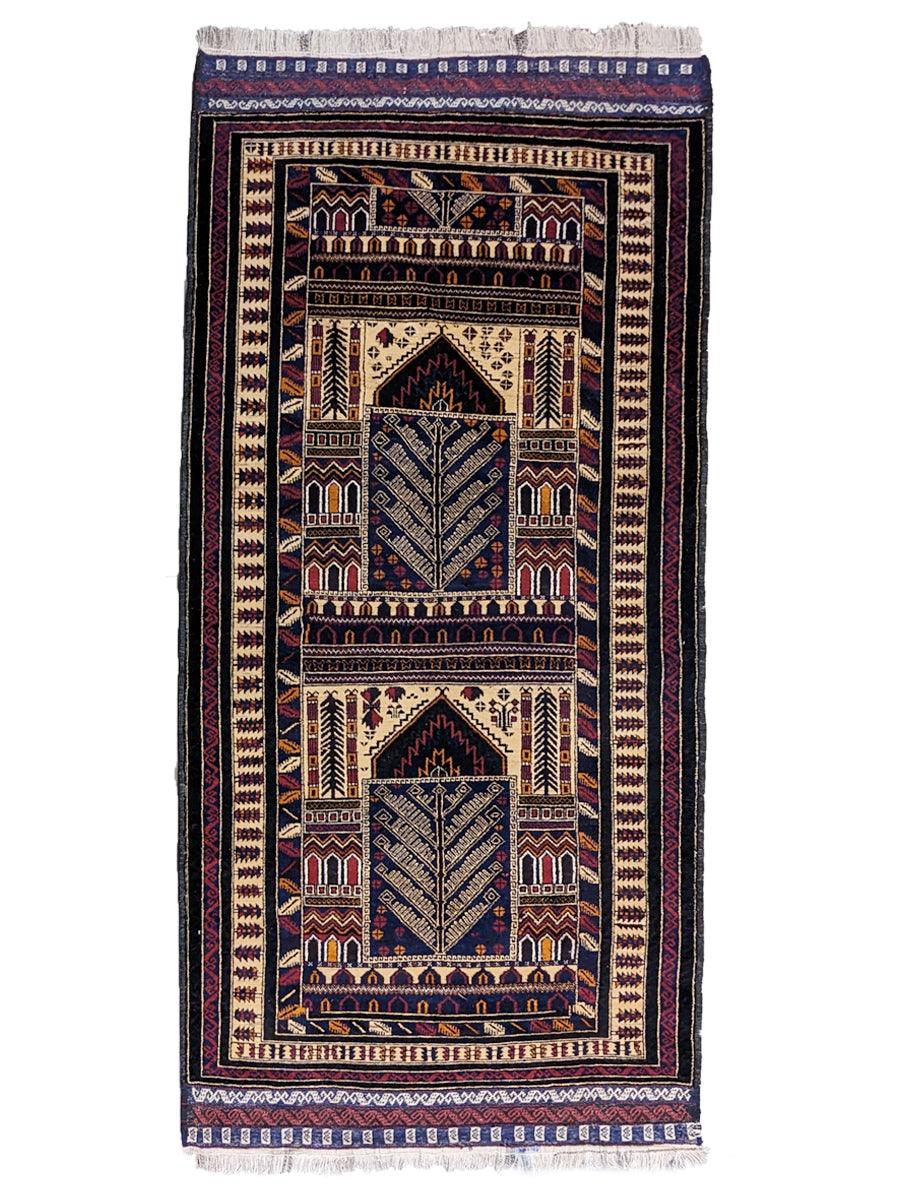
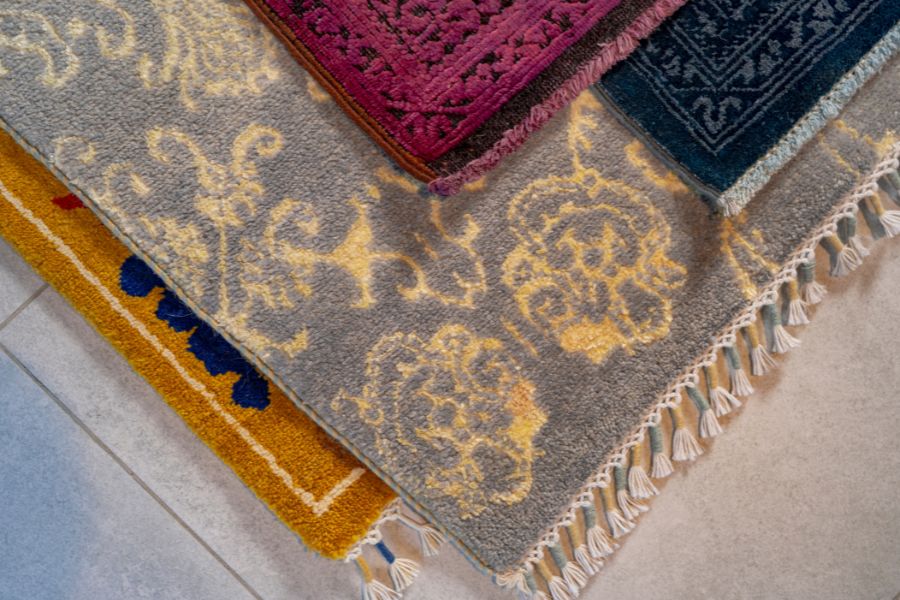
This label marks the rug as coming from a Label STEP certified manufacturer. It's brand-level identification, not a per-rug serial number, so the way to verify it is the same four-step process above: check Imam Carpets' own listing on label-step.org directly, not just the tag itself.
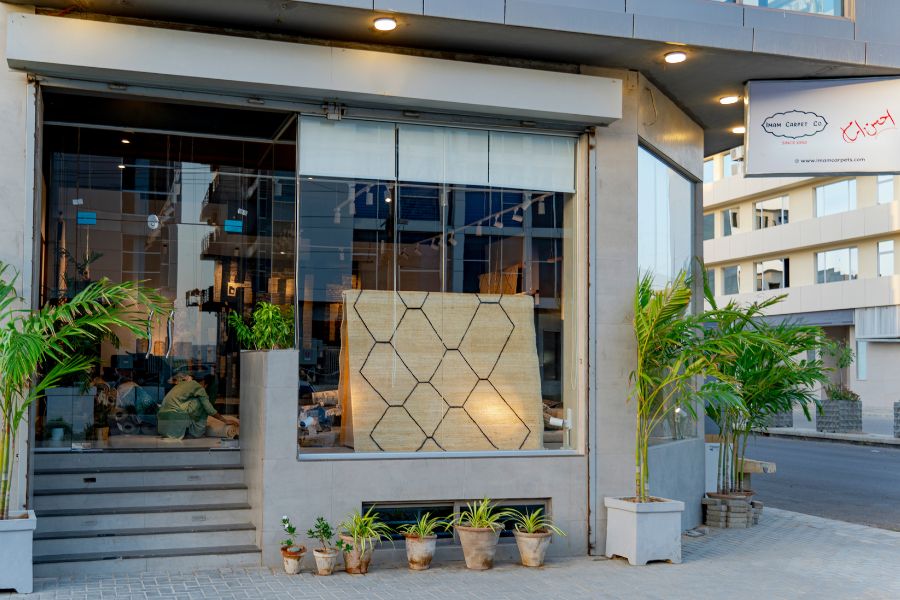
On top of certification, every product page lists knots-per-inch and pile height for that specific rug, not a category average. Named artisans are credited where the piece allows it. The Karachi Saddar showroom is open for in-person viewing, and verified buyers can receive the rug before paying, the same standard described above as the strongest trust signal a business can offer.
Browse Imam Carpets' traditional hand-knotted rugs to see current pieces with knot count and pile height listed.
Frequently Asked Questions
Is Label STEP a government certification?
No. Label STEP is an independent, non-governmental fair-trade standard founded in Switzerland in 1995. It operates separately from any national government and audits manufacturers against its own published standard (Label STEP).
Does every individual rug come with its own Label STEP certificate?
No. Label STEP verifies at the manufacturer level, not the individual rug level. There is no per-carpet certificate number or QR code in Label STEP's system. To verify a specific dealer, check the company's listing on Label STEP's partner directory rather than looking for a mark on the rug itself.
How is Label STEP different from GoodWeave?
GoodWeave issues a unique traceable code on its label that identifies the specific licensed producer of that piece, a product-level system. Label STEP verifies the manufacturer as a whole, a company-level system. Both are legitimate third-party fair-trade certifiers; they simply verify at different points in the supply chain.
Can I visit a Label STEP certified showroom in person?
Yes, where the dealer maintains a physical location. Imam Carpets' Karachi Saddar showroom is open to visitors who want to see certified pieces and ask about the specific rug's knot count, pile height, and origin before buying.
Does certification make a carpet more expensive?
Certification reflects audited labor and production standards, not a pricing tier by itself. Price is determined by materials, knot density, and size.
Conclusion
Label STEP certification is checkable, not a claim you have to take on faith. The four-step process above, going directly to label-step.org, finding the company's own listing, and cross-checking its address, takes less time than reading a product description. Combine that with the physical signs of a genuine hand-knotted piece, the back of the rug, the dye variation, a dealer willing to name the knot count for your specific piece, and you have a verification process that doesn't depend on trusting anyone's word for it.
Have questions about a specific piece? Get in touch with Imam Carpets.

Leave a comment